
A Beginners Guide to 10 Japanese KoiVarieties
Japanese koi, also known as Nishikigoi, and the ten varieties that define the hobby.
By Siddharth D'Souza
Estimated read time: 5-6 minutes
Today we dive deep into the world of Japanese koi, also known as Nishikigoi, and explore some of the most significant varieties that make this living art form so magical. There are hundreds of koi varieties, differentiated by colour, pattern, scale type and even shape - but don't worry, we'll stick to the ten that are most foundational and most fun to talk about.

A Bit of Back Story
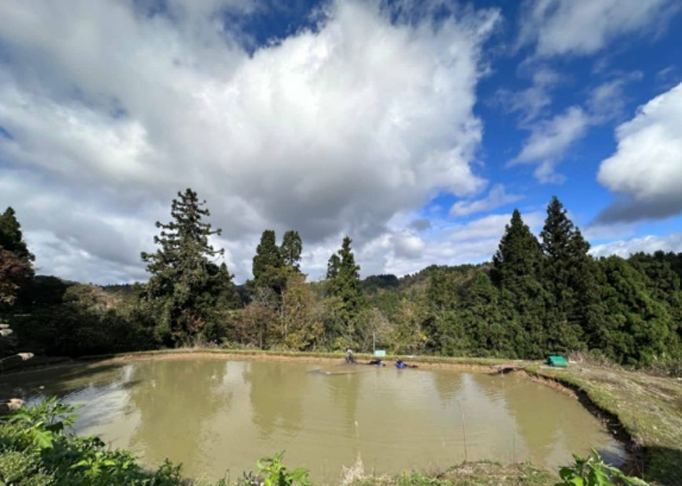
Nishikigoi, as they're known in Japan, trace their origins to the Niigata Prefecture, particularly the region historically called Niigumura (modern-day Ojiya, Nagaoka, etc.). Around 250 years ago, rice farmers began keeping magoi - common black carp - in their paddy fields as a kind of side business. In the snowy winters, when mountain supply routes were cut off, these carp became a vital source of protein. Sometime in the early 19th century, colour mutations among those black magoi caught farmers' eyes. One day someone said, "Hey, that red pattern is pretty cool" - and instead of eating it, they preserved and bred it. This was the Higoi, the first coloured carp.
Over the years, through selective breeding, other varieties like the light-blue Asagi emerged. The tradition grew in the isolated mountain villages of Yamakoshi and surrounding areas - summer ponds, winter quarries, and the koi culture quietly developed. The first big splash on the world stage came at the Tokyo Taisho Exposition in 1914, when these carp were shown as kawarigoi ("strange carp"). By the 1920s, cross-breeding accelerated, with the arrival of German mirror carp and the "Big Three" - Gosanke varieties taking shape. Exports from Japan began in earnest in the 1930s, making a debut at the Golden Gate International Exposition. By the 1960s, koi could be packed in oxygenated bags and flown long distances. Since the 2000s, koi export has grown into a serious business.
Ten Varieties That Define Nishikigoi
Here are 10 koi varieties you absolutely should know - whether you're building a show pond or just want to start developing your knowledge of the koi varieties.
1. Kohaku
Looks: A clean, milky-white body (shiroji) with bold red (hi) patches.
Why it's special: This is arguably the most iconic koi. Think of it as koi royalty.
The "blank canvas" nature of the white body makes it a favourite among breeders hunting for perfect red patterns. It's like hunting for the perfect lipstick shade. Some of the biggest prices in the industry have come from Kohaku. One example is the "S Legend" of Sakai Fish Farm, which reportedly sold for a massive yen 1.8 million at 101cm when sold.

2. Taisho Sanke (Sanke)
Looks: White base + red (hi) spots + black (sumi) markings.
Why it's significant: It's part of the Gosanke (Big Three) and brings in the elegance of black sumi without overwhelming the body.
Breeding note: The sumi should not cover the head - that's a distinction that separates Sanke from Showa.

3. Showa Sanshoku (Showa)
Looks: Black base with red and white patches.
Why people love it: Bold, dramatic, and more "artistic calligraphy" than simple spots - Showa is like the brooding poet of koi.
History: Fixed around 1927 by Shigekichi Hoshino. Note: Distinguishing between a Showa and a Sanke can be a separate article in itself but to simplify it; a Showa has black on the head and Sanke does not. There is a fine line, and it is tricky to distinguish between them on a few occasions - that is, if you don't know the nuances.

4. Asagi
Looks: Sky-blue (or indigo) net-like (reticulated) scales on top, red (hi) along the lower body and fins.
Why it's meaningful: One of the first koi varieties - its gentle colouration whispers stories of early koi mutations in Niigata's mountain ponds.

5. Shusui
Looks: Doitsu (mirror-scaled) version of Asagi. Often has one line of large dorsal mirror scales.
How it was made: Created by crossing Asagi with German mirror carp.
Charm: Adds a sleek, almost minimalist feel to the pond - like a painter removing every unnecessary brushstroke.

6. Utsuri (Utsurimono)
Looks: Black base with overlaid colour patches. There are three main types: Shiro Utsuri (black + white), Hi Utsuri (black + red), Ki Utsuri (black + yellow).
Why they're special: Their sumi (black) is bold and dominant. Utsuri often feel like ink in Japanese woodblock prints.

7. Ogon:
Looks: Single-colour metallic koi (gold/platinum/orange etc.).
Why people collect them: They shine like living coins in clear-ideal water, and you want a koi that gleams in sunlight like it's been polished by angels.
History: One of the well-known metallic blood lines was developed by Sawata Aoki, who created "gold" Ogon in the mid-20th century.

8. Goshiki
Looks: Five colours - typically white, red, black, light blue, dark blue. Hence the name "Goshiki" ("five colours").
Origin story: Resulted from breeding Asagi (or Asagi-like) koi with Kohaku/Sanke.
Why it's fascinating: It's like a koi rainbow - without showing off. The colours overlay in subtle and complex ways, making each fish feel like a mini masterpiece.

9. Koromo (Goromo)
Looks: White-bodied koi, like Kohaku, with red patches, but each scale in the red patch has a darker edge (blue or black), giving a "robed" appearance.
Major subtypes: Ai-Goromo: blue-edged scales; Sumigoromo: black-edged scales; Budo-Goromo: layered sumi (black) over the hi (red), producing a grape-like budo effect.
Why it delights collectors: It's refined, elegant, and shows how breeders play with subtlety - not just bold colours, but scale architecture.

10. Bekko
Looks: Base colour (white, red, or yellow) with black patches (sumi), but no break on the head.
Types: Shiro Bekko (white + black), Aka Bekko (red + black), Ki Bekko (yellow + black).
Appeal: Simple, classical, and honest. There's no flamboyant metallic sheen, no over-the-top pattern - just peaceful contrast.

Choosing Koi for Your Pond
At Ochiba Koi Studio, working in India, the approach is to look at koi varieties in the context of a long journey. These fish live decades, and their patterns tell stories of lineage, geography and patience. For someone just starting out and wanting a timeless, show-worthy koi, Kohaku or Sanke are suggested in the article. For a dramatic and depth-oriented choice, Showa is described as an option. For a calm, serene pond and understated elegance, Asagi or Shusui bring that tranquillity. For a koi that glitters in a sunshine-drenched Indian pond, Ogon is the pick. For those who crave colour complexity, Goshiki or Koromo offer that richness. And for minimalism, white, black or Utsuri keep things classically beautiful.
More Than Just a Koi
To begin this journey is to start building knowledge as well as a pond. The article's message is that Japanese-Indian koi culture is built pond by pond, with attention to the beauty of koi, water quality and experience. From choosing the right variety for your climate, to managing water quality in the strong Indian summer, and presenting koi in a way that makes even the masters in Niigata nod in appreciation - there is much to learn about. Research and experience are part of the journey.
Read the full story
The complete feature takes a closer look at the ten Japanese koi varieties - from Kohaku, Sanke and Showa to Asagi, Shusui, Utsuri, Ogon, Goshiki, Koromo and Bekko - along with their colours, patterns, histories and the qualities that make each variety distinct. Read the complete story in the November 2025 issue of The Weekend Aquarist.
👉Buy this issue or subscribe to The Weekend Aquarist to experience the full story.


Comments