
Discovering Micro-habitats
Micro-habitats, Monsoon & the Case for Looking Closer A roadside ditch. A flooded paddy field. A puddle beside the road. Dr. Nabojit Das has spent years looking at the water bodies everyone else walks past — and finding entire ecosystems hiding in plain sight.
By Dr. Nabojit Das
Estimated read time: 4 minutes
Assam and its neighbouring states sit directly in the path of the southwest monsoon, receiving immense amounts of rainfall every year. But not all of that water flows into rivers. In a landscape dotted with forests, paddy fields, bamboo groves, laterite outcrops, and riverine floodplains, rainwater pools, seeps, collects, and lingers in countless small places. In doing so, it creates something fascinating: microhabitats.

These tiny, often temporary ecosystems are easy to overlook. Yet they support an astonishing diversity of aquatic life, and may hold some of the most important ecological stories in the region.
How Fish Microhabitats Are Formed
A roadside ditch connected to a paddy field. A shallow depression in a floodplain that fills during the rains. An abandoned oxbow cut off from the main river. The seasonal margins of a beel — Assam’s characteristic wetland system — that expand and contract with the monsoon. At first glance, these places may appear insignificant. Look closer, however, and they reveal an entirely different world.

These habitats become home to native fishes such as small cyprinids, danios, badis, and snakeheads, along with freshwater shrimp, snails, and numerous other aquatic organisms that may be absent from the landscape during the dry season. What ties them all together is impermanence — many exist only for the duration of the monsoon, and the species that depend on them have evolved remarkable strategies to survive the cycle: rapid breeding, dormant eggs, and dispersal mechanisms that let them colonise newly connected habitats as floodwaters rise. Some pools, however, persist throughout the year. Their clay-rich bottoms retain water long after the rains have ended, allowing miniature ecosystems to remain active and productive even during the dry months.
Why This Matters More Than We Think
It’s tempting to dismiss a roadside puddle or seasonal pool as too small to matter — not a “real” habitat compared to a river, lake, or wetland. But ecological importance isn’t measured by size. Many of these overlooked spaces are where biodiversity is doing some of its most interesting work. They may harbour undocumented populations, serve as stepping stones for range expansion, or reveal behaviours that have never been formally recorded, simply because nobody thought to observe them for long enough. Unfortunately, these habitats are also among the easiest to lose.
“A microhabitat rarely disappears in a dramatic, headline-making event. More often, it is quietly drained, paved, filled in, or altered through routine land-use activities. By the time it is gone, few people even realise it existed — and what is not noticed is rarely protected.”
Where Citizen Science Makes a Difference
This is where ordinary observation becomes valuable. You don’t need specialised equipment or a research grant to notice that a particular roadside ditch fills with the same species of fish every monsoon, or that a moss-covered seep hosts a recurring community of aquatic invertebrates. You simply need curiosity, a camera, and the habit of paying attention. Every observation documented with a location and date — whether on iNaturalist, a hobbyist forum, or social media with proper tagging — adds a small but meaningful piece to a much larger puzzle. Multiply those observations across hundreds of hobbyists, aquarists, photographers and naturalists scattered throughout Assam and the wider Northeast, and a valuable record begins to emerge: where species occur, when they appear, and the conditions under which they thrive. This is precisely the kind of fine-scale information that institutional researchers often struggle to collect — there are simply too few researchers, and too much ground to cover. Citizen observations help bridge that gap.

Looking Beyond the Aquarium Glass
That, perhaps, is the strongest argument for stepping outside the aquarium room every now and then. At its heart, this hobby has always been about observation — watching behaviour, noticing subtle changes, learning to appreciate details many people overlook. Turning that same attention toward a forest puddle, a seasonal pool, or a moss-covered rock face isn’t a departure from the hobby. It’s an extension of it. Many of the habitats that shape the lives of the species we admire remain undocumented, understudied, and increasingly vulnerable. In a region changing as rapidly as Northeast India, conservation may not always require another expert carrying a clipboard. Sometimes it simply requires more people who already know how to observe closely, taking those skills into the field and applying them where they matter most.
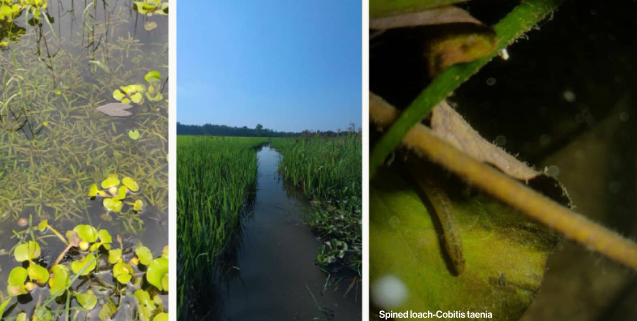
The next important discovery may not be waiting in a river or a wetland. It might be hidden in a puddle beside the road.
Watch & read the full story
Watch the full interview here — Discovering Secret Micro-Habitats with Dr. Nabojit Das, The Millennial Hobbyist
Read the full story in the June 2026 issue of The Weekend Aquarist.
👉Buy this issue or subscribe to The Weekend Aquarist to experience the complete tribute.


Comments