
Breeding India's Native Barbs
Science & Breakthroughs — how the PAGR Centre is closing the life cycle of the Western Ghats’ most threatened ornamental barbs.
By Saikrishna K.R., Abhilash C.P., Sharath Varghese, Charan Ravi and V.S. Basheer
Estimated read time: 3–4 minutes
The Western Ghats of peninsular India represent one of the world’s globally recognized biodiversity hotspots, harbouring an exceptional diversity of freshwater fishes with a high degree of endemism. The hill streams and river systems draining both westward and eastward support a remarkable assemblage of cyprinid fishes, particularly barbs belonging to the genera Dawkinsia and Pethia. These ornamental barbs are ecologically important components of stream ecosystems, and economically valuable in the global aquarium trade thanks to their vibrant coloration, schooling behaviour, and sexual dimorphism.

However, rapid habitat degradation, hydrological alterations, sand mining, pollution, and unregulated ornamental fish collection have led to population declines in several endemic species. In response, the ICAR-National Bureau of Fish Genetic Resources, through its Peninsular Aquatic Genetic Resources Centre (PAGR Centre) in Kochi, has undertaken systematic research to develop captive breeding technologies for priority endemic barbs — reducing dependence on wild populations and promoting conservation-oriented aquaculture.

A Race to Close the Life Cycle
In response, the ICAR-National Bureau of Fish Genetic Resources, through its Peninsular Aquatic Genetic Resources Centre in Kochi, has undertaken systematic research to develop captive breeding technologies for priority endemic barbs — work aimed at reducing dependence on wild populations while supporting conservation-oriented aquaculture. One of the species at the centre of this effort is Dawkinsia tambraparniei, restricted entirely to the Tamiraparani River basin in the southern Western Ghats — a fish found nowhere else, growing to little more than 10-12 cm, and already considered threatened enough to require conservation attention.
From Wild Stock to Farm-Ready Seed
Getting an endemic, habitat-specific barb to breed reliably in captivity is not straightforward. It takes controlled broodstock conditioning, carefully managed spawning environments, and a feeding regime tuned to each life stage — from freshly hatched larvae through to juveniles ready for release or distribution. At PAGR Centre, that process has now been standardised across multiple Dawkinsia and Pethia species — each with its own distinct range, appearance, and ecological quirks, but all facing the same pressures in the wild.
Dawkinsia
The genus Dawkinsia comprises medium-sized barbs characterized by filamentous dorsal-fin extensions in mature males, metallic body sheen, and distinct body blotches. Many species are endemic to specific river basins of the Western Ghats and exhibit strong habitat specificity.
Dawkinsia tambraparniei
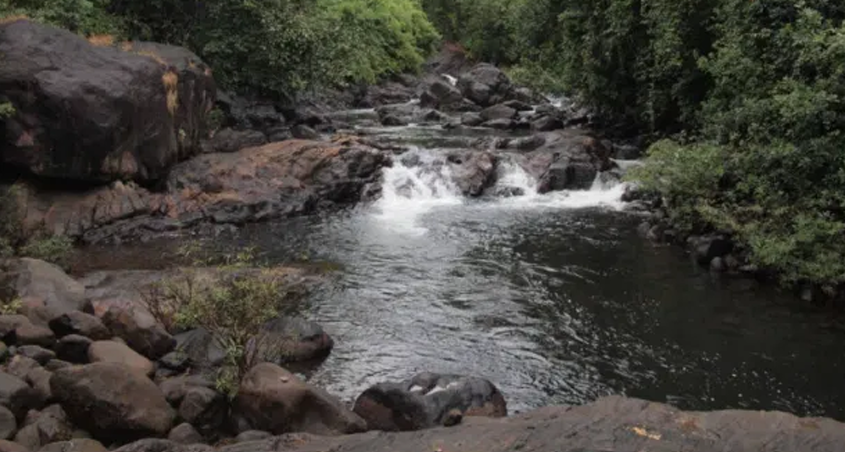
Dawkinsia tambraparniei is an endemic cyprinid restricted to the Tamiraparani River basin of Tamil Nadu in the southern Western Ghats. It inhabits moderately fast-flowing stretches of rivers with rocky and sandy substrates, often forming shoals in mid-water columns, and attains a maximum size of approximately 10–12 cm total length. Morphologically, it is distinguished by a laterally compressed body, prominent lateral blotches, and, in mature males, elongated filamentous extensions of the dorsal fin rays. Sexual dimorphism is well expressed: males show brighter body coloration, enhanced metallic sheen, and slender profiles, while females are comparatively larger with rounded abdomens during the breeding season. In the wild, it feeds on periphyton, filamentous algae, small invertebrates, insect larvae, and detritus. Due to its restricted distribution and historical collection for the ornamental trade, the species is considered threatened.

Dawkinsia rubrotinctus
Dawkinsia rubrotinctus is distributed in select river systems of the southern Western Ghats, preferring clear streams with moderate current and gravelly substrates. It grows to about 8–10 cm, characterized by reddish pigmentation along the fins, distinct lateral markings, and a moderately deep body. Adult males display intensified red coloration on the dorsal and caudal fins along with filamentous dorsal extensions, while females possess a deeper abdomen during gonadal maturation. It is a schooling, mid-water species feeding on benthic algae, zooplankton, small crustaceans, insect larvae, and organic detritus. Habitat disturbance and localized exploitation have raised concerns about its population stability.

Why a Fish Tank Matters for a River
The value of this work goes beyond any single species. Hatchery-bred juveniles reduce pressure on wild collection, can be released into selected native habitats as part of supportive conservation programmes, or distributed to ornamental fish farmers — a dual strategy that pairs habitat protection with a sustainable, farmer-level alternative to wild-caught stock. It's a quiet kind of conservation — happening in glass tanks and breeding cages rather than headline-making rescues. But for barbs that exist in a single river basin and nowhere else, it may be the difference between a species holding on and one disappearing from the wild entirely.
Dawkinsia arulius
Dawkinsia arulius, commonly recognized for its metallic blue-green sheen and characteristic vertical blotches, inhabits clear hill streams and river stretches with moderate to swift currents in the Western Ghats, reaching 8–12 cm. Males show brighter coloration, more pronounced fin filaments, and slender bodies, while females are deeper-bodied with rounded abdomens during spawning readiness. It is omnivorous, consuming algae, diatoms, aquatic insect larvae, small crustaceans, and plant debris. Increased habitat modification and collection pressure in certain regions have led to localized population reductions.

Dawkinsia rohani
Dawkinsia rohani is a narrowly distributed endemic species inhabiting specific river systems of the Western Ghats, preferring well-oxygenated streams with moderate flow and mixed substrates. Adults grow to approximately 8–10 cm, with a streamlined body, distinct lateral pigmentation, and elongated dorsal fin rays in males. It feeds primarily on benthic algae, small invertebrates, insect larvae, and detrital material. Owing to its limited distribution range and environmental pressures, it is considered vulnerable and requires habitat protection measures.
Pethia
The genus Pethia includes small to medium-sized barbs widely distributed in peninsular India, with several endemic representatives in the Western Ghats.
Pethia setnai
Pethia setnai is a small-sized endemic barb inhabiting vegetated margins of hill streams and slow-flowing tributaries in the Western Ghats, generally reaching 4–6 cm. It possesses a compact body with distinct lateral markings and subtle fin pigmentation, and is a shoaling fish occupying shallow stream habitats with leaf litter and submerged vegetation. It feeds on microalgae, zooplankton, insect larvae, and organic detritus. Habitat degradation and localized exploitation have impacted some populations.

Pethia nigripinnis
Pethia nigripinnis — p. 17 Pethia nigripinnis inhabits clear freshwater streams with moderate current and rocky substrates in the Western Ghats region, attaining approximately 5–7 cm total length. It is characterized by distinctive fin pigmentation, a compact body form, and lateral markings, with omnivorous feeding habits — consuming algae, small crustaceans, insect larvae, and detrital matter. Habitat modification and collection for the ornamental trade may influence population dynamics in certain localities.
Breeding Protocol
The breeding protocol standardized for Western Ghats barbs at PAGR Centre emphasizes environmental induction, broodstock conditioning, and minimal stress handling. Mature males and females are segregated and conditioned in separate tanks with optimal water quality — temperature 26 28°C, near-neutral pH, and adequate dissolved oxygen. Spawning trials are conducted in 60 × 30 × 30 cm glass aquaria equipped with breeding cages or mesh separators to prevent egg predation. Spawning typically occurs within hours of pairing, with fertilized eggs settling below the mesh and hatching within 22–26 hours under stable temperature conditions. The system is simple, scalable, and suitable for farmer adoption.
Food and Feeding
Broodstock are maintained on a protein-rich diet comprising formulated pellets supplemented with live feeds such as mosquito larvae, bloodworms, and Moina to enhance gonadal development and spawning readiness. After hatching, larvae remain yolk-dependent for approximately three days, after which hatchlings are first fed freshly hatched Artemia nauplii to ensure high survival and rapid growth. Larvae are then transitioned to Moina and gradually weaned onto finely powdered pelleted feeds — a sequential strategy that ensures optimal growth and survival during early developmental stages.
Conservation Significance
The development of captive breeding technology for endemic barbs serves both ecological and socioeconomic objectives. By producing hatchery bred juveniles, dependence on wild collection is significantly reduced, alleviating fishing pressure on vulnerable natural populations. At PAGR Centre, juveniles reared for approximately 60 days are either released into selected native habitats as part of supportive conservation programmes, or distributed to interested ornamental fish farmers. Hormone-free and low-input breeding protocols further enhance fish welfare and reduce operational costs, making the technology accessible to small-scale farmers.

The Western Ghats barbs of the genera Dawkinsia and Pethia represent both an invaluable component of India’s freshwater biodiversity and a vital resource for the ornamental fish trade. The captive breeding initiatives undertaken at ICAR-NBFGR’s PAGR Centre demonstrate that scientifically structured broodstock management, environmental breeding induction, and standardized larval rearing protocols can successfully close the life cycle of multiple endemic barb species — a dual strategy of habitat supplementation and farmer-level seed dissemination that integrates conservation with responsible aquaculture development.
Read the full story
The complete feature — covering every species profiled, the full breeding protocol, water parameters, feeding sequence, and the broader conservation significance of this work — appears in the March 2026 issue of The Weekend Aquarist.
👉Buy this issue or subscribe to The Weekend Aquarist to experience the complete tribute.


Comments