
Marine Biologist. Aquascaper.
Dr. Nithyanandan Manickam on two decades of marine science, competitive aquascaping, and translating ecology into art.
By The Weekend Aquarist
Estimated read time: 7–8 minutes
Dr. Nithyanandan Manickam is an Associate Research Scientist at the Kuwait Institute for Scientific Research, with over two decades of expertise in marine ecology and biodiversity. Holding a PhD from Bangor University, his work spans benthic ecosystems, habitat restoration, and the study of marine life in both natural and artificial environments. Beyond science, he's a passionate aquascaper inspired by Takashi Amano, actively competing in global contests like IAPLC and AGA — bringing together research, art, and the aquarium hobby in a genuinely unusual combination.

Q: How did your journey into marine ecosystems begin?
"My journey began with a deep fascination with marine life from a very young age. I pursued Zoology at Madras Christian College, followed by a Master's in Oceanography and a PhD in Marine Ecology at Bangor University. Professionally, I started with the Zoological Survey of India as a research scholar in 2000, before moving to Kuwait in 2006 — and my work since has focused on marine biodiversity, benthic ecology, fish larvae diversity, and habitat restoration." "Interestingly, fishkeeping has been a parallel journey since the age of eight — what began as a hobby eventually evolved into another dimension called aquascaping."
"This experience deeply influenced how I think about aquascaping. An aquarium is also a dynamic system where life evolves over time. Through my tanks, I continue to explore and understand these interactions on a smaller scale."
Q: Your work on nudibranchs and fish larvae explores the microscopic world of marine life. What draws you to these organisms?
"Nudibranchs are among the most flamboyantly coloured marine invertebrates on the planet — but despite their beauty, they have very specific ecological roles, feeding habits, and defence mechanisms. Fish larvae represent an entirely different dimension. They're incredibly fragile yet remarkably resilient; it's astonishing that a large adult fish begins life as a tiny larva, navigating a hostile environment before undergoing transformation."
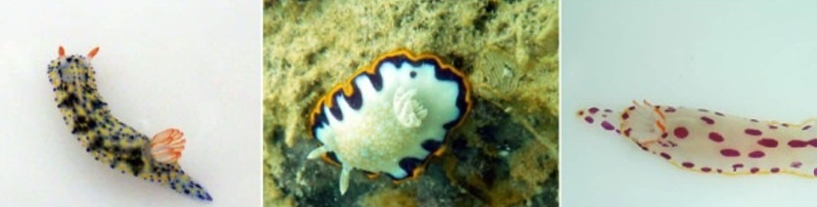
"These organisms are nature's masterpieces. They teach us about adaptability, survival, and specialisation — lessons hobbyists can apply in understanding aquarium ecosystems."
Q: How did you transition from hobbyist to competitive aquascaper?
"In 2012, I came across the work of Takashi Amano, and it completely transformed my perspective. I realised the aquarium hobby had evolved into something far more profound — a fusion of art and science. I spent nearly seven years experimenting and learning before I felt ready to take the next step into competitive aquascaping."

"In 2020, I submitted my first contest aquascape to the AGA. That gave me the confidence to enter IAPLC in 2022 with my layout Tranquility. While it ranked #753, the ranking was secondary — the real value was in the journey. Designing, building, planting, and nurturing a scape to maturity is a process filled with lessons."
Q: What separates a "good tank" from a world-class aquascape?
"A good tank is one where plants and fish thrive in a stable, healthy environment. A world-class aquascape goes far beyond that — it's a complex, artistic, and ecological representation of a natural landscape within a confined space. It's not just about aesthetics — it's about authenticity, balance, and storytelling through nature."

Q: What mindset shift would you recommend for hobbyists who want to move beyond fishkeeping to truly understanding nature?
"Aquascaping is essentially about engineering a living ecosystem. As aquarists, we have a unique opportunity to observe how nature builds itself, from scratch, within our tanks. The shift is simple: don't just maintain an aquarium — observe it, learn from it, understand it. When you do that, you begin to appreciate the true complexity and beauty of nature."
A Name in the Water
In 2015, a ghost shrimp collected from Sabah Al Ahmad Sea City was named after Dr. Nithyanandan by Japanese and German taxonomists — Kuwait upogebia nithyanandan. The species has since also been recorded from India, a small but permanent mark left on the very ecosystems he's spent two decades studying.
Watch & read the full story
Watch here: the full interview with Dr. Nithyanandan Manickam
Read the full story in the magazine: Readers who want the complete conversation — including his full aquascape gallery (Intertwined, Mystique Valley, Perseverance, and The Forgotten Passage), his answer on balancing coastal development with conservation, and the full editor's closing note — will find it in the April 2026 issue of The Weekend Aquarist.
👉Buy this issue or subscribe to The Weekend Aquarist to experience the complete tribute.


Comments